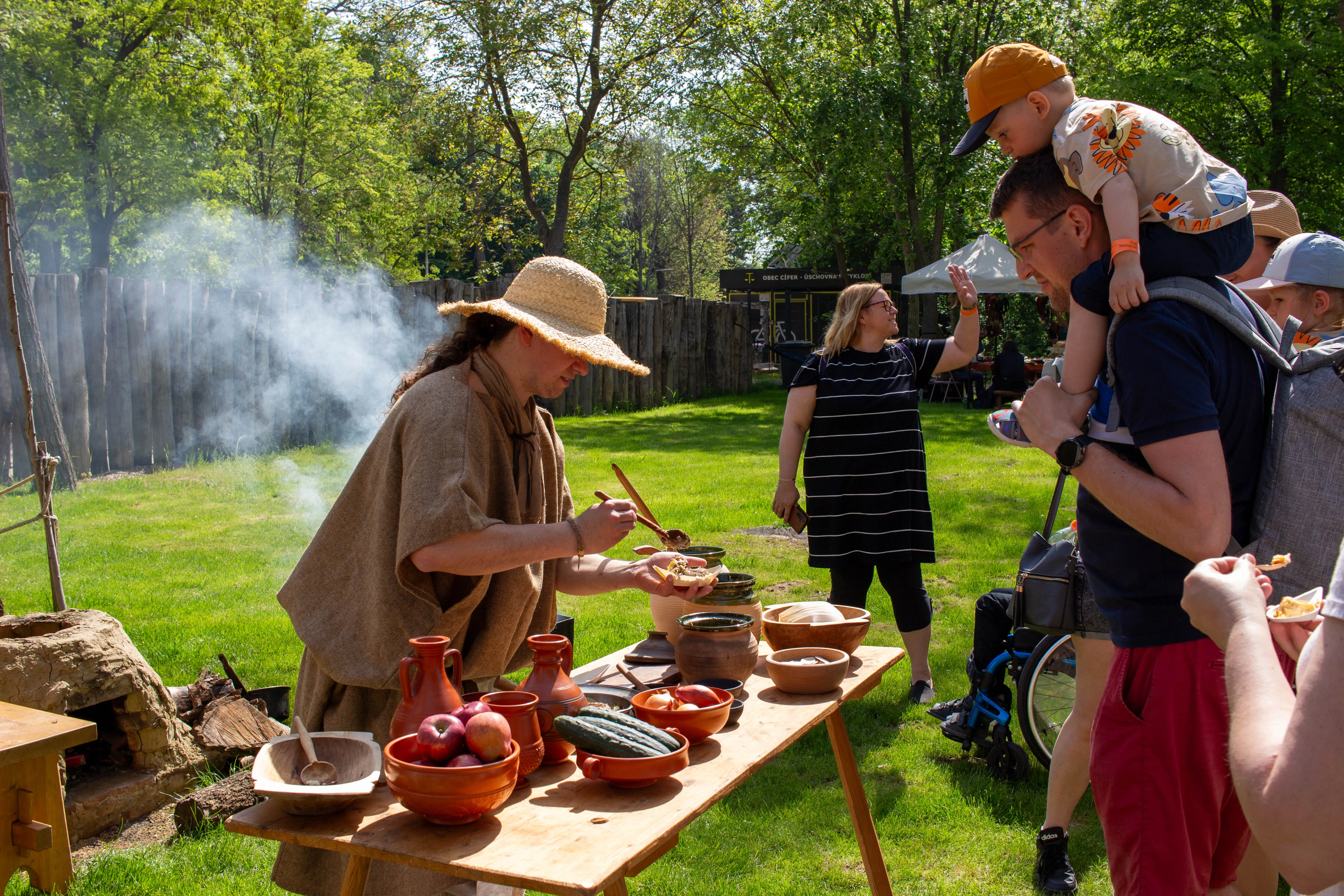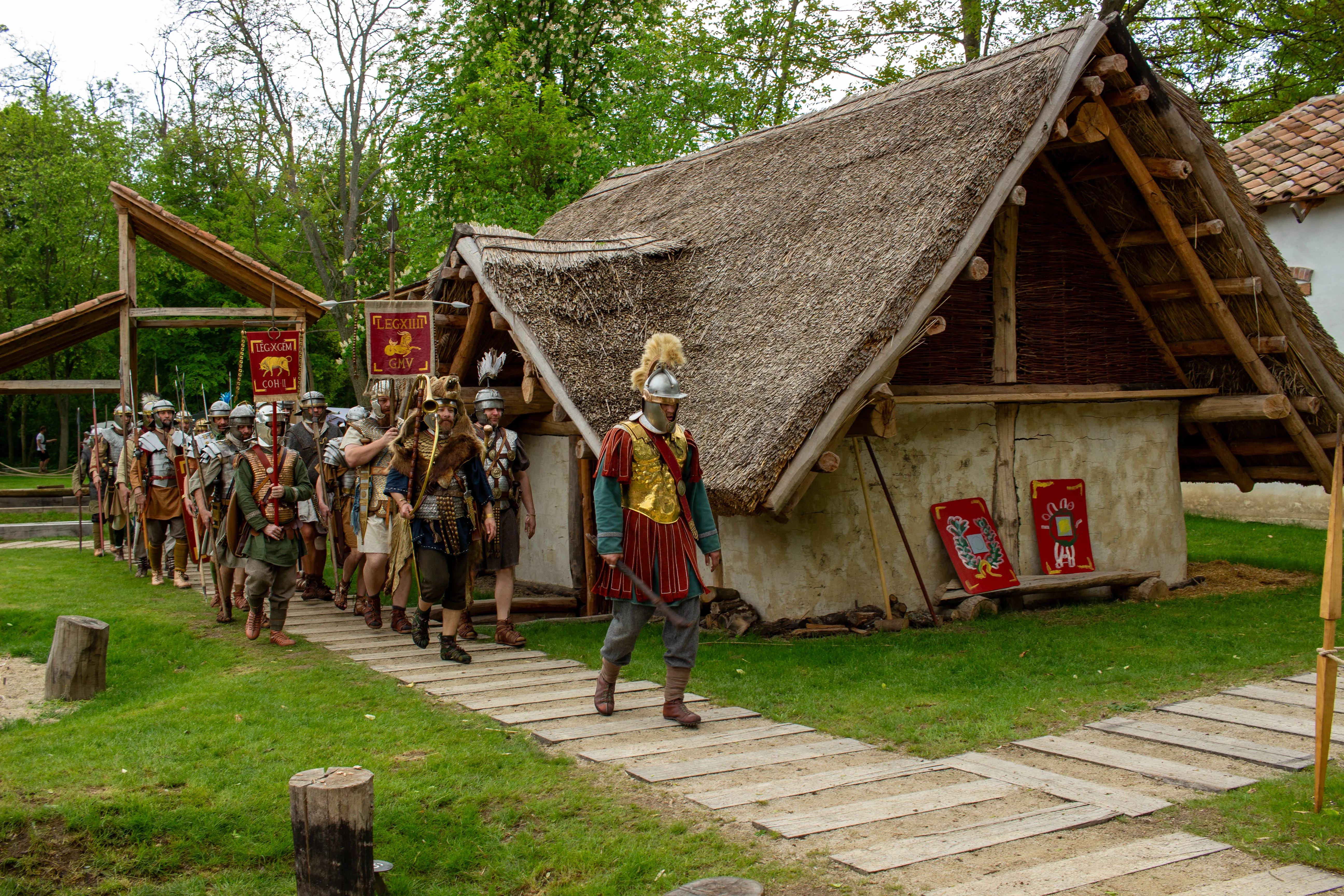
The game *Across the Frontier: Romans and Germans in Cifer-Pac* has been released on the gaming portal of the international Heritage Game project. Trnava University in Trnava collaborated with the Cífer-Pác Archeopark on its development. It guides visitors through a site that, in late antiquity, lay beyond the northern border of the Roman Empire. However, it does not offer a simplistic narrative of “Germans versus Romans.” Instead, it shows what was actually found at the site, how the findings are interpreted by experts, and where there is still room for questions.
The past is not a completed puzzle
Cífer-Pác lies approximately 34 kilometers north of the former Danube border of the Roman Empire. Archaeological research has uncovered an extensive site featuring structures influenced by Roman architecture, as well as dwellings and workshops that drew on local traditions. Experts therefore interpret it as the seat of the local Quadi elite, rather than a Roman fortress or a simple replica of a Roman country villa.
The digital tour leads through five thematic stops. First, it explains the significance of the border on the Danube and why the Roman military camp across the river did not yet signify permanent Roman administration. Visitors then explore the semi-subterranean dwellings and the agricultural facilities, followed by a building with a colonnade. A separate stop is dedicated to a structure that archaeologists believe was a bathhouse. The conclusion traces how the interpretation of the site gradually shifted from a “Roman outpost” to a civilian settlement of the local elite.
At each location, a short text, a visual or audio cue, and a question appear. After answering, visitors do not simply receive a notification of whether their choice was correct. The game explains which evidence supports a given conclusion and, conversely, which aspects of the available findings cannot be reliably determined.
This can be illustrated by the stone structure north of the main complex. Part of the foundations, the apse, and an outdoor furnace for distributing hot air have been preserved. These findings support the explanation that this may have been a small bathhouse. However, the floor, heating channels, and pools have not been preserved, so the digital tour does not present the building’s complete form as a certainty. Visitors can see the difference between a find, a probable explanation, and a later reconstruction.
A Slovak Game as Part of an International Collaboration
Seven European universities and local partners in the countries where the individual games are being developed are participating in the Heritage Game project. This is not the same story adapted to different locations. Each route is based on a specific location, its history, and the questions that experts and local people address in interpreting it. The Slovak route is one of several games on the shared website. Others showcase landmarks in partner countries through stories, tasks, and questions tied to specific locations. The portal demonstrates that a digital game does not have to reduce expert knowledge to a factual quiz. It can guide visitors to observe evidence, compare possibilities, and understand why some answers remain open-ended.
How to Try the Game
The game runs directly in a web browser and is available in both Slovak and English. It can be used individually or during a group visit; the interface allows you to create a group and work with the codes for individual stops. It is designed primarily for use directly at the Cífer-Pác Archeopark, where the digital content is linked to the site, the reconstructed structures, and the archaeological exhibition.
This is more than just a new way to tour the archeopark. It demonstrates that archaeology is not a collection of fixed answers. It is the uncovering of traces, in which a convincing explanation must always be distinguished from what we can only speculate about.
The Game and Additional Information
• Heritage Game – information about the international project
• Portal of available games
• Direct access to the game about Cífer-Pác
• Cífer-Pác Archeopark
Project No. 2023-1-PT01-KA220-HED-000154261 “A Gamification Model for Community-Based Heritage Work” is co-funded by the European Union.
Author: Lucia Nováková
Photo: Cífer-Pác Archeopark