Who “owns” the past? Is heritage something that can be locked away in a repository, described in a catalog, and displayed as an ancient artifact—or is it rather a living relationship between people, places, and the stories we collectively tell, explore, add to, and pass on? It is precisely this question that lies at the heart of what has been referred to in recent years as the participatory turn in cultural heritage work.
When Heritage Opens Up to Participation
The traditional model of heritage preservation and presentation has long been based on the authority of experts: historians, archaeologists, heritage conservationists, and curators. Their role is and remains irreplaceable—without expert research, we would often have no idea what is the subject of preservation, research, and interpretation. At the same time, however, this model naturally created a distance: the public was primarily an audience that watches, listens, and (in the best case) learns something new. The participatory shift does not negate this model but complements it with a new perspective of “shared authority.” Simply put, expert knowledge is not in opposition to the experiences of local communities, but is interconnected with them. Heritage, understood in this way, is not merely a list of protected sites, but also what the community considers important, what shapes its identity, what gives it meaning, and what it wishes to develop further. In practice, this means a shift from the question “What shall we show you?” to the question “How will we approach this together?” And from the notion of the visitor as a passive consumer to the notion of the visitor—or local resident—as a co-creator of meaning.
Why Now? Heritage as a Democratic Competency
The participatory shift did not happen overnight. It is a response to broader changes in society: to the need for inclusion, to the growing emphasis on civic engagement, to sensitivity toward diverse perspectives (including those that have long been overlooked), but also to the issue of trust. In an environment where the public sphere is becoming polarized and society is grappling with fragmentation, cultural heritage can serve as a platform for dialogue—not as a museum backdrop, but as a shared theme that can be grasped through experience, local memory, and shared responsibility. Participation here does not mean “arbitrariness” or a trivialization of expertise. On the contrary—high-quality participation is methodologically demanding. It requires clear rules, ethics, the ability to engage in dialogue, to work with contradictions and uncertainties in interpretation, and, above all, to create situations in which people feel that their voice carries weight. This is one reason why, in contemporary museology, heritage conservation, and the historical sciences, we are increasingly encountering concepts such as co-curation, community or public archaeology, citizen science, participatory mapping, and living labs.
Digital Technologies and Their Significance
Digitization is a major catalyst for the participatory shift. Not because technology automatically “democratizes” heritage, but because it opens up new forms of engagement: it allows us to share stories, gather local knowledge, create layers of interpretation, and connect expert data with personal experiences. Moreover, the digital environment naturally incorporates interactivity and feedback. This is precisely the type of communication that participation requires. Gamification is also related to this: the application of game principles outside the world of games. Gamification, however, is not just about points, badges, or leaderboards. In its best form, it’s primarily about narrative, motivation, and decision-making: about people entering a story, solving tasks, testing hypotheses, piecing together a “mosaic” of knowledge, and learning in the process. In the context of heritage, this is exceptionally valuable—archaeology and history are disciplines that work with clues, questions, interpretation, and imagination. If gamification is designed thoughtfully, it can serve as a bridge between specialized content and the public: it deepens engagement, fosters curiosity, encourages repeated visits, and—most importantly—creates a space where people feel invited rather than tested.
HERITAGE GAME: A project that tests participation in practice
https://www.heritagegame.eu/
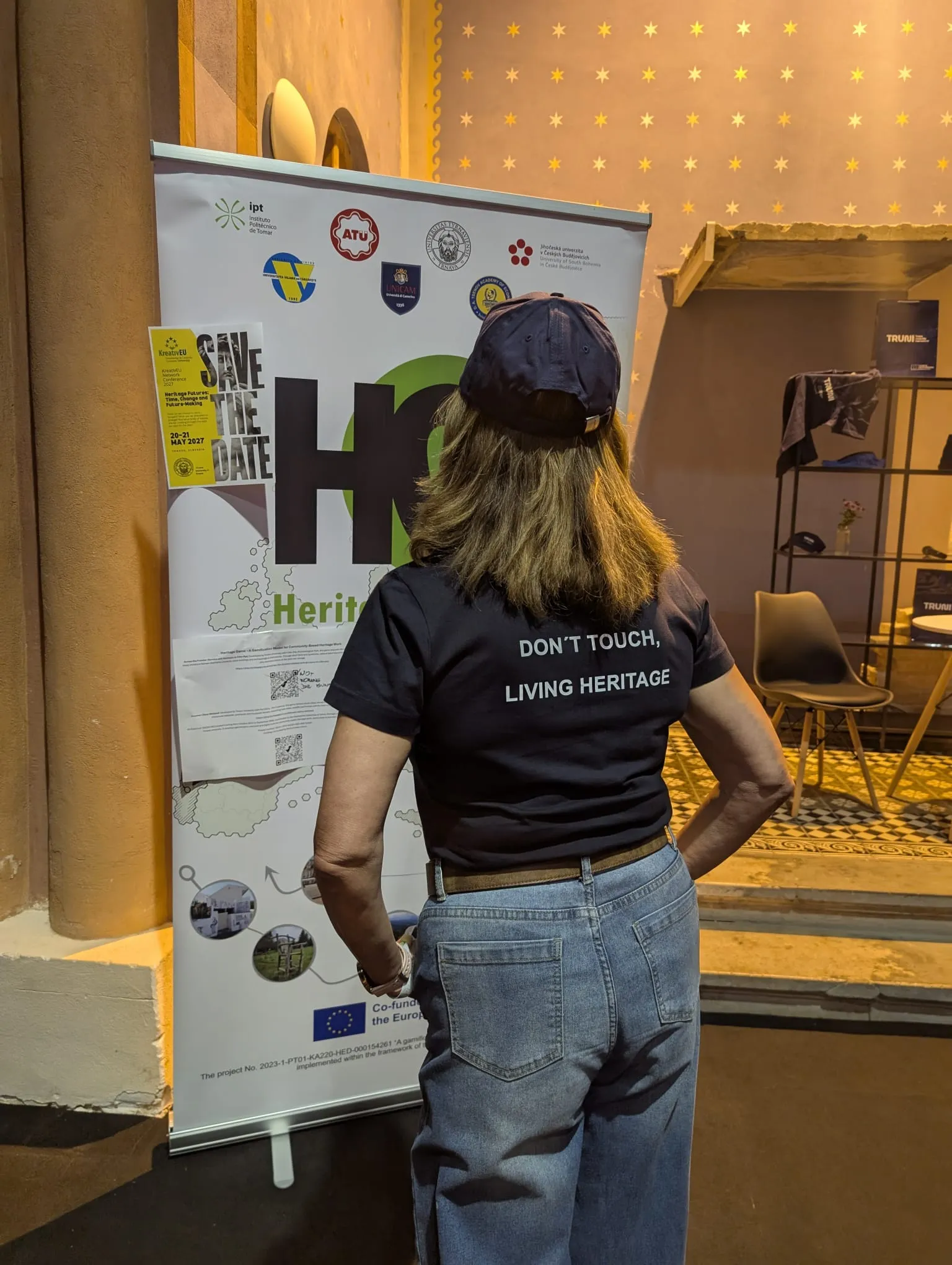
These very challenges and opportunities are at the heart of the Erasmus+ project HERITAGE GAME – A gamification model for community-based heritage work (2023-1-PT01-KA220-HED-000154261), in which Trnava University in Trnava is also participating. The project brings together university teams from seven countries and focuses on how to support civic participation in heritage through gamification in sparsely populated regions. The ambition is not to create “just another app.” The goal is to build a model and a practical tool that can be adapted to various local contexts—and that is developed directly in collaboration with local stakeholders. The purpose is clear: for heritage to be alive, it must be accessible and meaningful to people, and it must give them the opportunity to join in—not as spectators, but as partners.
Cífer-Pác Archaeological Park: A Place Where the Past Is Within Reach
https://www.archeoparkcifer.sk/
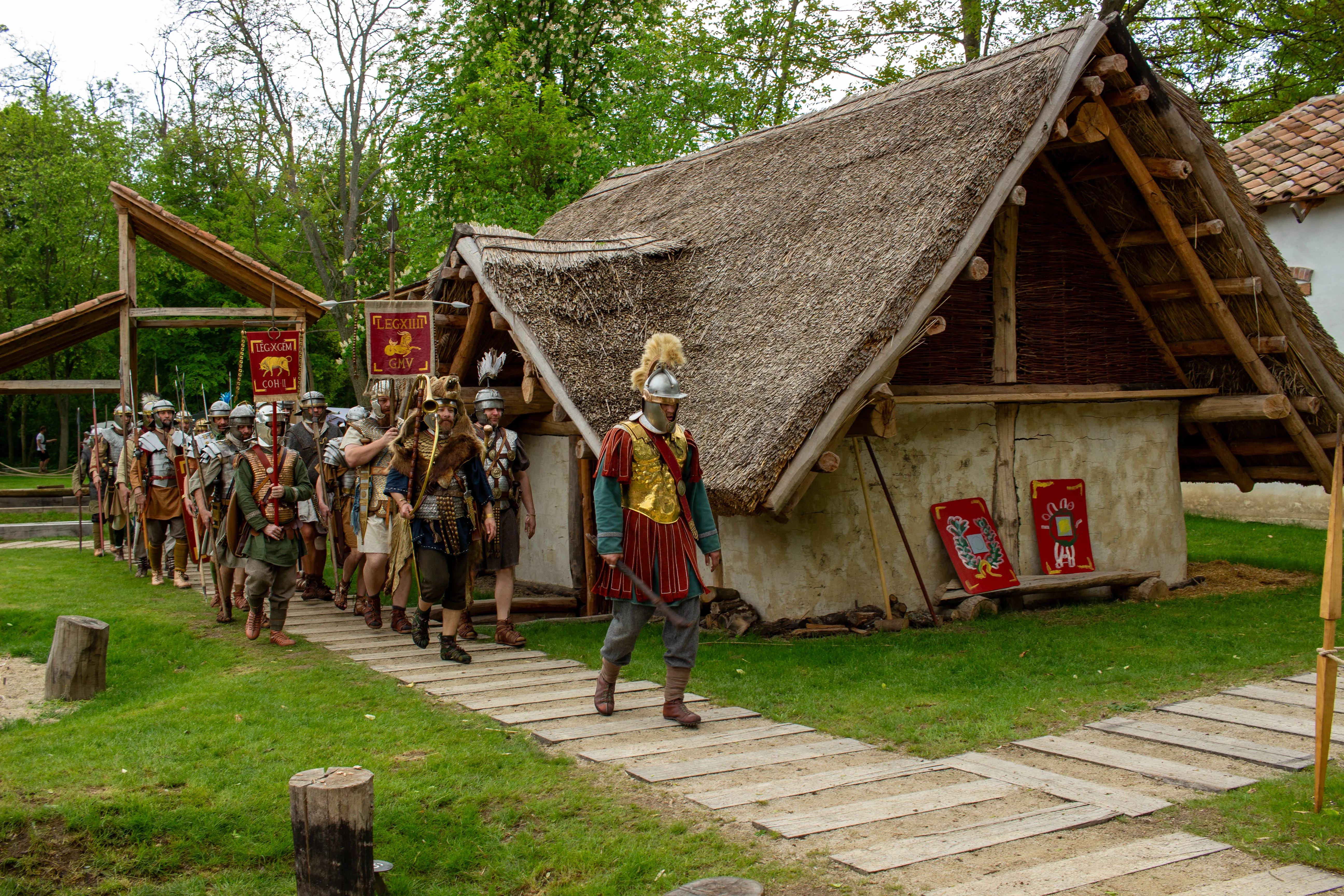
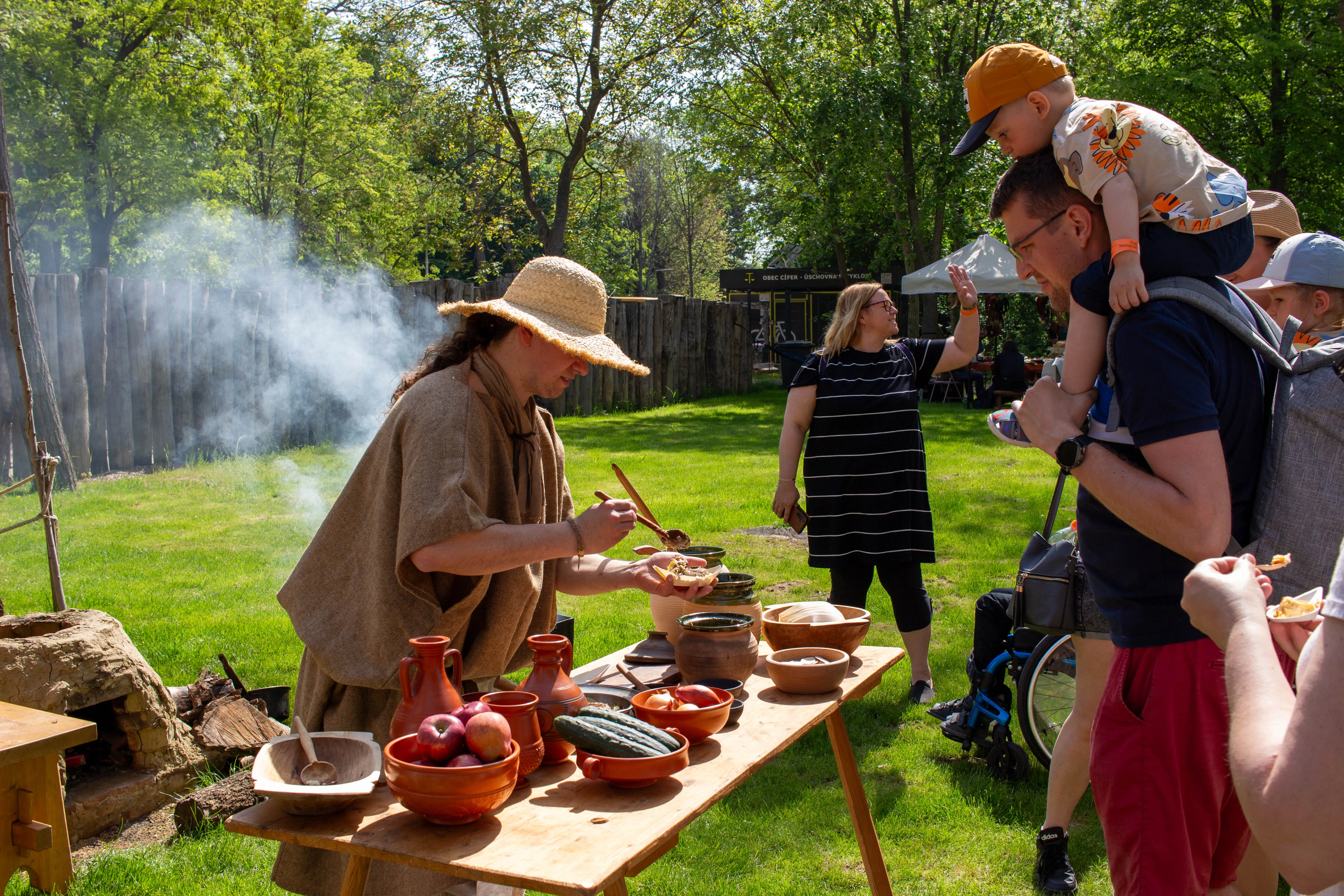
One of the first Slovak partners in this process is the Cífer-Pác Archaeological Park. Its strength lies not only in the appeal of the archaeological site itself, but also in the fact that it serves as a bridge between science and the public, between specialized research and local identity, and between exhibits and experience. This approach is grounded in a solid academic foundation—it builds on the long-standing research activities of Prof. Vladimír Varsik from the Department of Classical Archaeology at the University of Trnava, who served as the archeopark’s academic advisor and was directly involved in its conception and implementation. The archeopark offers visitors more than just “observation”: reconstructed structures, exhibits, experiential archaeology programs, and educational activities create an environment where the past can not only be seen but also understood through everyday life—by asking questions such as: What was life like here? What was considered valuable? What was contact with the Roman world like? What did it mean to be part of a community at the crossroads of different cultures? It is a place where participation can happen naturally: through conversations with local people, through working with stories, through identifying “what is ours”—and at the same time through rigorous scholarly oversight, which ensures that interpretation is not based on romanticized narratives but on a critical and responsible understanding of the archaeological evidence.
From a Display Case to Co-Creation: What Matters Most?
The participatory shift in heritage is not a passing trend. It is a change in perspective: heritage ceases to be a “finished product” and becomes a relationship that must be nurtured. And that is precisely where its strength lies: when people become co-authors of the story, they are more motivated to protect, visit, develop, and pass on the heritage. The HERITAGE GAME project and the collaboration with the Cífer-Pác Archeopark are concrete steps toward ensuring that this shift does not take place only on paper, in documents, and in strategies, but in the real world—in communities, in museums, in regions, and in conversations with those whom heritage concerns most: the people who live within it.
Photo: Cífer-Pác Archeopark
Author: doc. Mgr. Lucia Nováková, PhD.